
Customs law attorney
Since 2022, customs law has entered a new era. The spread of unilateral tariffs imposed by the United States and the European countermeasures, the definitive entry into force of the Carbon Border Adjustment Mechanism (CBAM), the growing entanglement of customs law with international sanctions regimes, tighter controls on dual-use goods, and the announced overhaul of the Union Customs Code have turned the field into a discipline of economic sovereignty. For companies operating international supply chains, customs clearance is no longer merely a technical act: it is a multidimensional compliance operation, where a single error can block the goods, trigger a reassessment and expose the company to criminal sanctions.
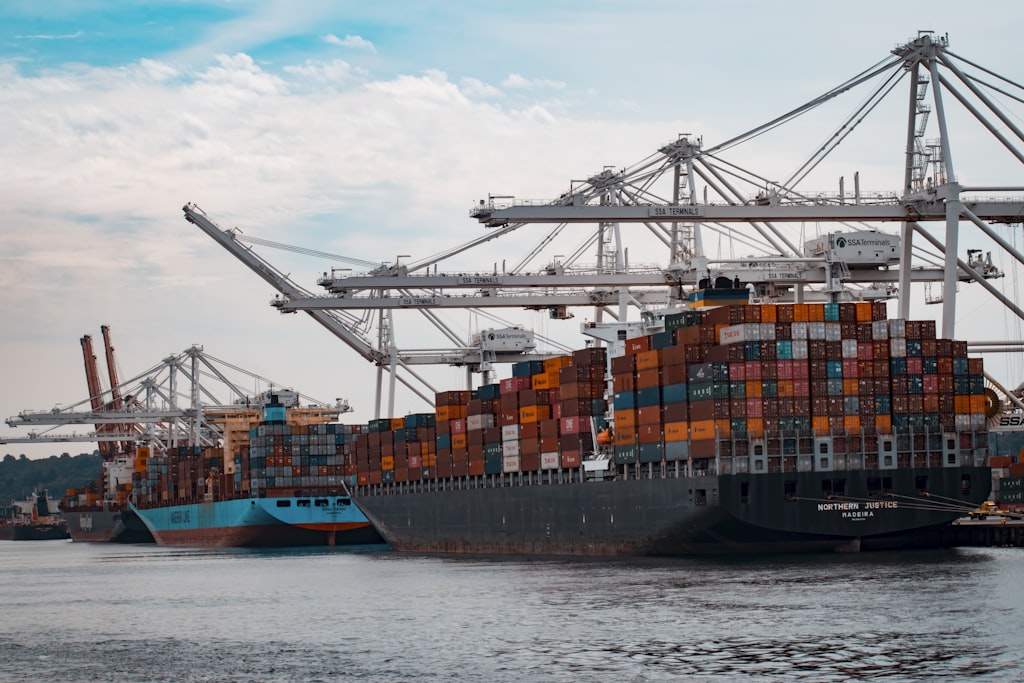
Within the European Union, the Union Customs Code (UCC) governs customs practice across the Member States. Each country nevertheless retains its own national specificities in matters of control and sanctions, which makes the expertise of a specialized attorney particularly valuable.
What a customs law attorney does
Preventive advice
Ahead of any customs operation, the attorney advises clients on their reporting obligations and helps them structure their goods flows in an optimized way. Our firm can assist you in obtaining customs authorizations, such as Authorized Economic Operator (AEO) status, which significantly streamlines clearance procedures and reduces inspection times.
The Carbon Border Adjustment Mechanism (CBAM)
The CBAM Regulation introduces carbon pricing on the embedded emissions of goods imported into the European Union. The transitional phase, which was purely declarative, has been running since October 1, 2023. The definitive phase entered into application on January 1, 2026: importers of iron and steel, aluminium, cement, fertilizers, electricity and hydrogen must now purchase CBAM certificates corresponding to the emissions embedded in the imported goods, on pain of significant financial penalties.
MOSAIK assists importers and their suppliers across the entire mechanism: classification of products under the CBAM nomenclature, calculation of embedded emissions, designation and obligations of the authorized CBAM declarant, interaction with carbon pricing schemes in the country of origin (deductibility), contractual management of CBAM cost pass-through along the supply chain, and, where necessary, challenges to decisions of the European Commission and the competent national authorities.
Tariffs, trade defense measures and dual-use goods
The global tariff environment has hardened since 2025: a proliferation of unilateral tariffs, rebalancing measures adopted by the European Union, fast-tracked anti-dumping and anti-subsidy investigations, and heightened surveillance of strategic imports (electric vehicles, semiconductors, solar panels). Companies operating flows between the EU, the United States, China and Mexico now have to reconfigure their supply chains and legal structures on an ongoing basis.
In parallel, Regulation (EU) 2021/821 on the control of exports of dual-use items (and its extension to cyber-surveillance items) imposes licensing and enhanced due diligence obligations on European exporters, whose breach exposes them to heavy customs and criminal penalties. MOSAIK advises its clients on product classification, obtaining licenses (general, global or individual) and the Internal Compliance Programmes required by the regulation.
Assistance during customs inspections
When a company undergoes a customs inspection, having an attorney present is decisive. Customs officers hold significant powers: the right to conduct site visits, to require the production of documents, and to conduct interviews. These powers must nonetheless be exercised within a strict legal framework.
The attorney ensures that the client's rights are respected throughout the inspection. They attend interviews, verify that the procedures are lawful and advise on how to respond to the administration's requests. This early involvement often prevents damaging mistakes and limits the financial consequences of a potential reassessment.
Defense in customs litigation
Customs litigation covers all disputes between an economic operator and the customs administration. Several types of proceedings can be distinguished:
- Administrative customs litigation: challenging duty reassessments, customs fines, refusals of authorizations or refunds. The attorney analyzes the file, verifies the lawfulness of the administration's acts and files the appropriate appeals.
- Criminal customs litigation: smuggling, importation of prohibited goods, false declarations, counterfeiting. Sanctions can be severe: fines, confiscation of the goods, prison sentences. The attorney builds a tailored defense strategy and pleads before the criminal courts.
- Collection disputes: challenging the merits of a collection notice, requesting payment terms, negotiating to prevent the goods from being blocked.
- Customs valuation and origin disputes: challenging the methods used to determine the transaction value, interaction with intra-group transfer pricing, qualification of preferential or non-preferential origin, application of the rules of origin under the EU / United Kingdom agreement, CETA or other free trade agreements. These disputes can involve very substantial amounts and require close coordination with international tax matters.
Customs and international sanctions: a continuum
The line between customs law and sanctions law has blurred. Goods correctly declared to customs may be blocked under EU sanctions, US OFAC measures or the UK OFSI regime; conversely, a sanctions-compliant transaction may be challenged by the customs authorities because of an incorrect tariff classification or uncertainty about origin. Managing the two regimes together (they involve distinct authorities but common questions of fact: chain of ownership, routing of the goods, identity of the beneficial owner) requires an integrated approach that MOSAIK delivers as one team across its customs, financial flows and international practices.
Specific areas of intervention
- Customs seizures: verifying the lawfulness of the seizure, challenging procedural defects, negotiating the release of detained goods;
- Intellectual property and customs: assisting rights holders seeking the detention of suspect goods, as well as importers under investigation;
- Financial relations with foreign countries: advice on the reporting obligations applicable to cross-border capital movements.
Customs settlements: an effective alternative to trial
In many cases, the attorney can negotiate a settlement with the customs administration. This procedure avoids long and costly court proceedings while securing a significant reduction of the penalties initially incurred. Once concluded, the settlement puts an end to the proceedings and provides valuable legal certainty. The attorney assesses whether this amicable route is appropriate and negotiates its terms in the client's interest.
Frequently asked questions
Q: My company imports steel or aluminium into the EU: does the CBAM apply to me?
A: Yes. As of January 1, 2026, importers of covered products (iron and steel, aluminium, cement, fertilizers, electricity, hydrogen and the processed products listed in Annex I to the Regulation) must purchase CBAM certificates corresponding to the emissions embedded in the goods. A prior analysis of your tariff classification and supply chain identifies your actual exposure, your reporting obligations and the levers for reducing the cost (deductibility of carbon paid at origin, changes in sourcing, contractual restructuring).
Q: My goods have been detained at customs: how long do I have to act?
A: The deadlines are short and strictly enforced. The lawfulness of the detention, any seizure, the customs classification and the release strategy must all be assessed within the first few days. Acting as soon as the notification is received often makes it possible to negotiate a swift release against security, in parallel with the challenge on the merits, and to avoid the deterioration or prolonged immobilization of the goods, costs that often exceed the duties at stake.
Q: I have just learned that one of my products qualifies as a dual-use item: what should I do?
A: The first step is precise classification under Annex I to Regulation (EU) 2021/821, which may require a technical analysis of the product. Depending on the outcome, several options exist: an individual license, a global license or a general export authorization. Putting an Internal Compliance Programme in place is now standard market practice, and sometimes a requirement of principals, and is an essential protection in the event of an inspection.
Would you like to
contact us?